
4 Steps to Zero Downtime: The Resilience Framework for Data Centers
Unplanned data center downtime can cost upwards of Rs. 7.5 Lakh Per Minute (Source: Mogahed, 2022) —and that’s just the financial impact. The real cost? Lost trust, disrupted operations, and reputational damage.
We’ve seen first-hand how energy and thermal failures cripple data centers. The solution? A resilience framework focused on Absorption, Resistance, Recovery, and Adaptation—practical steps to eliminate downtime and ensure seamless operations.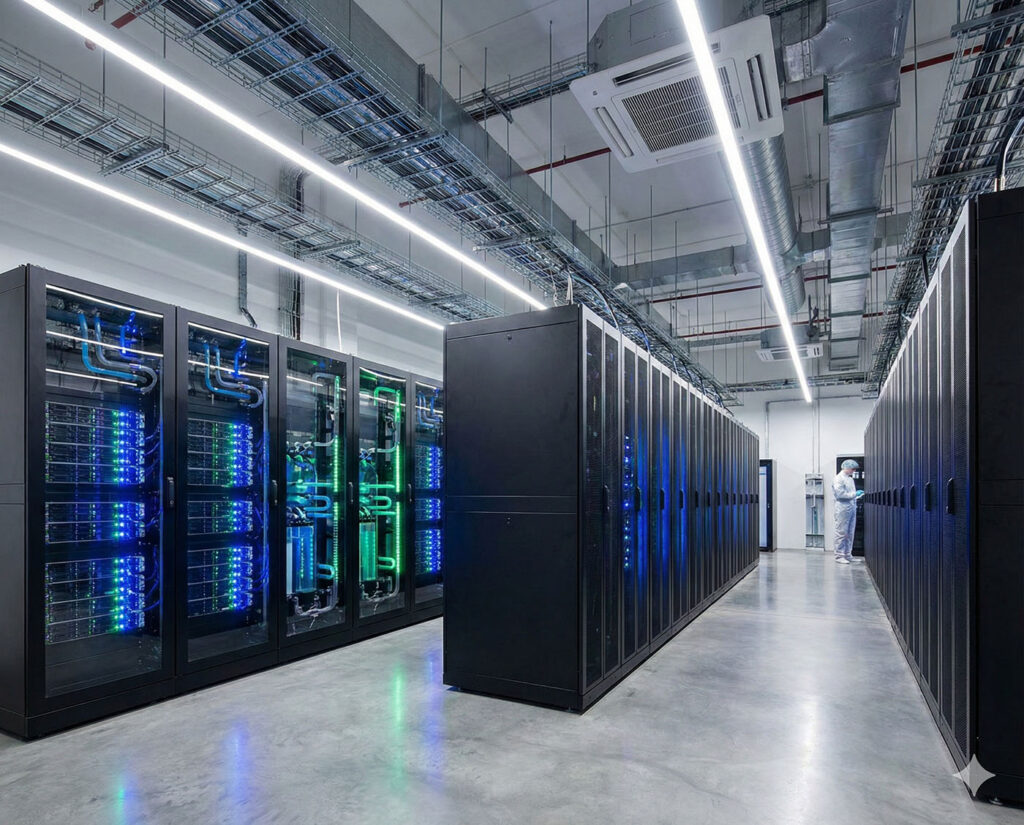
1. Absorption: Preventing Failures Before They Begin
Thorough Cleanliness & Dust Control
- Dust is the silent enemy of data centers. It clogs vents, overheats servers, and reduces cooling efficiency.
- Actionable Step: Implement anti-static cleaning with HEPA filters in high-risk areas. Regularly deep clean server rooms to prevent accumulation. Kärcher Industrial Vacuums are great for deep cleaning.
Zero Obstructions in Airflow Management
- Even a minor obstruction near ducts or cooling units can create heat pockets, damaging critical equipment.
- Actionable Step: Conduct routine airflow audits to ensure cold air reaches where it’s needed.
Preventive Maintenance for Cooling Systems
- 19% of data center failures link back to cooling system malfunctions. (Source: DataCenterKnowledge)
- Actionable Step: Deploy IoT-based predictive monitoring to track real-time temperature and humidity fluctuations.
2. Resistance: Strengthening Core Systems Against Failure
Static Electricity Control
- Even a small static discharge can fry sensitive circuits and bring operations to a halt.
- Actionable Step: Install anti-static mats, grounding solutions, ambient temperature and monitor humidity levels with Dickson 3 point calibrated sensors.
Redundancy Management in Cooling Systems
- N+1 redundancy ensures there’s always a backup in case of system failure.
- Actionable Step: Test backup cooling systems monthly to guarantee uninterrupted operation during peak loads.
3. Recovery: Fast Response to Minimize Disruptions
Real-Time Thermal Monitoring
- Overheating isn’t sudden—it’s predictable. But only if you have the right insights.
- Actionable Step: Use Schneider EcoStruxure for AI-driven monitoring to flag anomalies before they escalate.
Sealed Room Integrity
- Leaks in server rooms can lead to rapid thermal imbalances, causing cooling inefficiencies.
- Actionable Step: Conduct thermal imaging audits to detect and seal leaks proactively.
Contamination Prevention Protocols
- External contaminants affect cooling efficiency and introduce risk.
- Actionable Step: Implement air curtains, HEPA filtration, and anti-contaminant protocols at entry points.
4. Adaptation: Future-Proofing for Long-Term Success
Optimized Rack Placement & Layouts
- Poorly placed racks cause hot/cold aisle misalignment, leading to inefficient cooling.
- Actionable Step: Implement hot/cold aisle containment strategies for even airflow distribution. Nlyte DCIM really helps with real-time rack heat mapping.
Continuous Staff Training
- Tech solutions are only as good as the people managing them.
- Actionable Step: Conduct quarterly training on resilience planning and emerging energy-efficiency strategies.
Building a Resilient Data Center: The Bigger Picture
Resilience isn’t just about preventing failures—it’s about designing smarter, more efficient facilities that adapt and thrive in an increasingly digital world.
We’ve helped organizations transform their IFM strategies to minimize risk and maximize uptime. The real key? Proactive action, not reactive fixes.
Are your data center resilience strategies future-proof? If not, it’s time to rethink.
What’s the biggest challenge you face in preventing data center downtime? Drop your thoughts below.